
In the 32 states of America, over 404,000 individuals live without being connected to the public grid electricity not just because they are not able to be connected to it, they simply have not decided to do so. These are the Amish and they are multiplying at an unprecedented rate compared to almost any society in the United States. They have more than 131 percent population growth compared to the last ten years of the year 2000. One of the most silent but powerful cultural narratives in America today is what causes this electricity-free life to be something deliberate.
Who They Are
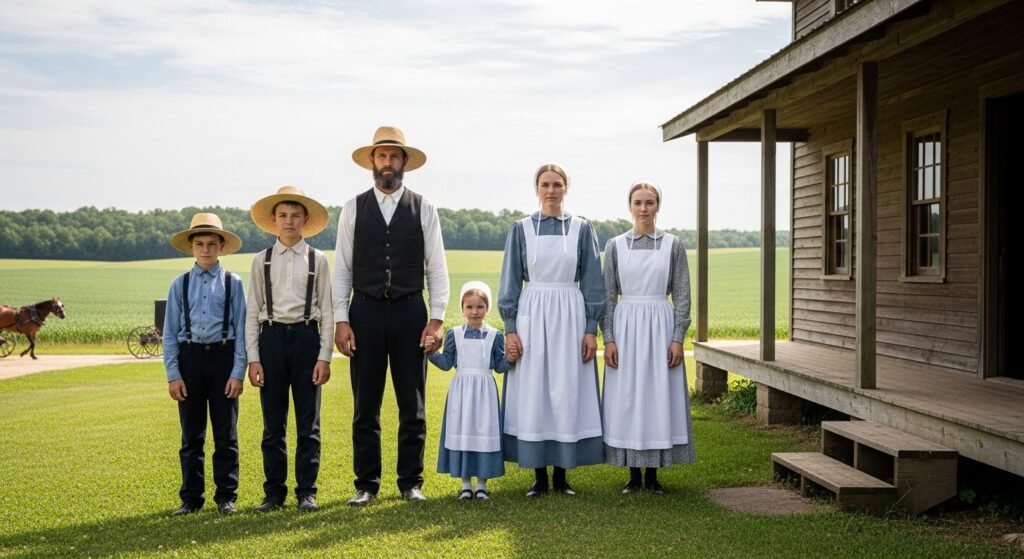
The Amish are conservative Anabaptist Christian with Swiss and German roots, who appeared in Pennsylvania in the early 1700s in order to flee religious persecution in Europe. The Young Center of Anabaptist Studies of Elizabethtown College reports that their total population in North America amounted to 410,955 as of June 2025.
Where They Live
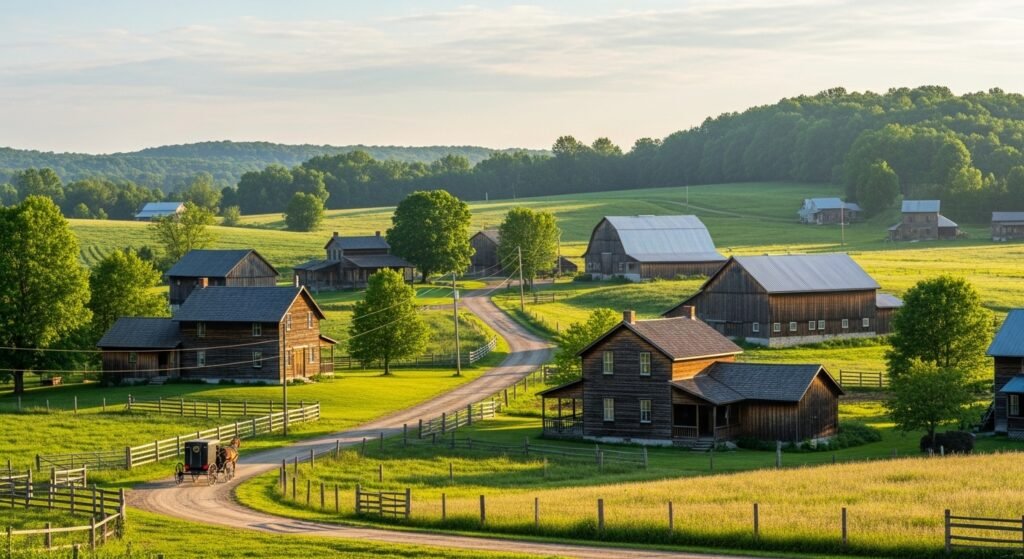
Pennsylvania has the highest number of Amish residents among 79 settlements, 95,400, Ohio with 86,300 residents in 95 settlements and the number of inhabitants in Indiana is 67,300. The Amish represent a fundamentalist religious group ,Lancaster County, Pennsylvania is the oldest Amish settlement dating back to 1760 that is home to 44,765 individuals in 267 church districts.
Why No Grid

Amish condemnation of public grid electricity dates back to the early 20 th century. Their issue was not power but what that power entailed – televisions, radios, and external stimuli that community leaders thought was going to tear families apart. Most Amish communities have since the 1920s completely severed their connection to public power lines, and have not had such ever since.
Their Actual Rules

The congregations have vastly different rules. Swartzentruber Amish, the most conservative group, prohibits any sources of electrical power, such as batteries. A majority of the Old Order communities allow battery operated buggy lights, propane operated refrigerators, and diesel-powered generators to be connected to a select farm equipment but, by no means, allow them to connect to the common utility system.
Solar Is Rising

Not everything that is electric is prohibited. At the Amish Garb of Grabill, Indiana, as well as in Holmes County, Ohio, this increase is now common with rooftop solar panels on an ever-growing number of Amish farms. Solar has been considered as a legitimate off-grid power power source since it does not require the household to be interdependent with external public infrastructure and invites the distractions of grid connectivity.
They Are Growing Fast

The report of the June 2025 Young Center shows that the Amish people are doubling about every two decades. Families bear an average of five or more children and 85 percent of Amish youths take baptism and stay within the community as adults. In 2024, nine new Amish settlements were founded in such states as Indiana, Kentucky, Maryland, Michigan, Missouri, and Ontario.
Business Without Power

An estimated 40000 of the 40,000 dairy farms in the U.S. belong to the Amish. Amish craftspeople, Amish woodworkers, and Amish builders use compressed air and pressurized oil instead of electricity powered tools in their activities with a pneumatic and hydraulic system. Building, furniture, quilting, roadside markets are economic activities in all big settlements.
Community Over Convenience

The Amish neighbors have to rely on one another when carrying out big projects without the aid of power tools and electric farm equipment. One of the living traditions, the Amish barn-raising, in which the whole community gathers to erect a neighbors barn in just one day, continues to strengthen the community ties sorely lacking in electricity-linked neighbors.
It Is Spreading West
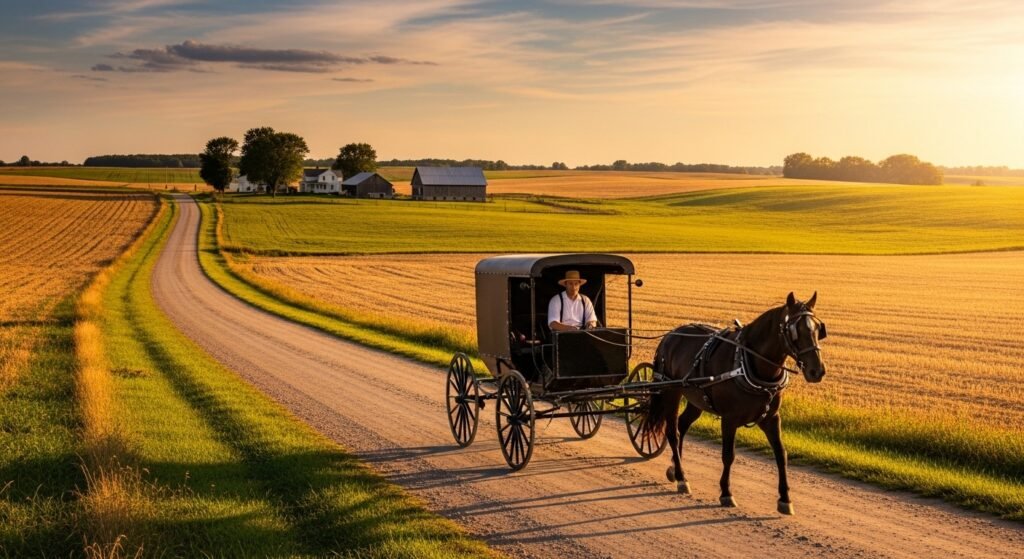
The western states are now the locations of the fastest-growing Amish populations. The number of Amish in Colorado increased by almost 57 percent since 2020 as well as in Montana by more than 60 percent. The first Amish settlements of the century have been granted by such states as Wyoming, Nebraska, New Mexico, Vermont and South Dakota, which proves that this no-electricity lifestyle continues to grow steadily across the USA.
